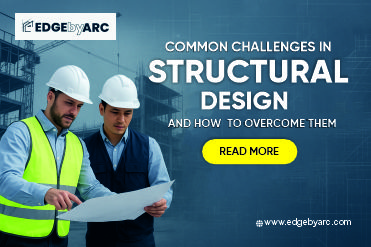
Common Challenges in Structural Design and How to Overcome Them
- +91-7838539806
- edgebyarc@gmail.com
Structural design is the backbone of every construction project — quite literally. From skyscrapers to bridges and residential buildings, the success of any structure relies on how well it’s planned, designed, and executed. However, structural design is not without its challenges. Engineers, architects, and project managers often face a wide range of obstacles — from material selection to meeting safety codes and balancing cost with efficiency.
In this blog, we’ll explore the most common challenges in structural design and practical ways to overcome them — ensuring stronger, safer, and more sustainable buildings.
1. Balancing Safety and Aesthetics
One of the biggest dilemmas in structural design is maintaining the balance between safety and aesthetics. Architects often envision creative and unique structures, while engineers must ensure these designs are structurally sound.
Solution:
Collaboration is key. Early coordination between architects and structural engineers helps achieve both creative expression and functional safety. Using advanced modeling tools like BIM (Building Information Modeling) and finite element analysis can help visualize stress points, ensuring stability without compromising design intent.
2. Managing Material Selection and Durability
Choosing the right material is crucial for a structure’s longevity and performance. The wrong choice can lead to corrosion, cracking, or reduced load-bearing capacity over time.
Solution:
Material selection should be based on environmental factors, load requirements, and maintenance needs. Conducting a life-cycle cost analysis (LCCA) ensures long-term sustainability. Innovative materials such as high-performance concrete, composite steel, and fiber-reinforced polymers can enhance durability and reduce maintenance costs.
3. Dealing with Complex Load Calculations
Structural engineers must account for dead loads, live loads, wind loads, seismic forces, and more. Miscalculations or oversights in these factors can lead to design failure.
Solution:
Using advanced computational software for simulation and analysis can minimize human error. Regular design reviews and peer checks add another layer of safety. At EdgebyArc, our team utilizes the latest structural analysis tools and design codes to ensure every project meets the highest standards of precision.
4. Adhering to Building Codes and Regulations
With frequent updates in building codes and RERA guidelines, staying compliant can be challenging, especially for large-scale or mixed-use projects.
Solution:
Always stay updated with the latest IS codes, NBC guidelines, and RERA standards. Partnering with an experienced consultancy like EDGEbyARC, which prioritizes regulatory compliance and documentation accuracy, ensures your project remains legally sound and structurally reliable.
5. Cost Optimization Without Compromising Quality
Cost constraints often lead to design compromises, affecting safety, functionality, or long-term performance.
Solution:
Implement value engineering early in the design stage. Optimize material usage, adopt modular design methods, and choose sustainable solutions that reduce long-term costs. At EDGEbyARC, we focus on delivering cost-efficient yet structurally strong solutions tailored to each client’s goals.
6. Coordination Between Design and Construction Teams
Miscommunication between design and construction teams can result in delays, errors, or even rework during execution.
Solution:
Regular coordination meetings, digital collaboration platforms, and BIM integration bridge the gap between design intent and on-site execution. EDGEbyARC project supervision and consultancy services ensure seamless coordination from concept to completion, minimizing risks and ensuring design integrity.
7. Adapting to Site and Environmental Constraints
Each site presents unique challenges — from soil conditions to weather impacts. Ignoring these factors can cause foundation failures or structural instability.
Solution:
Conduct detailed geotechnical investigations before design. Design foundations and structural systems that align with soil capacity and environmental conditions. EDGEbyARC experienced engineers specialize in creating adaptive, site-specific solutions for long-term structural safety.
Conclusion
Structural design challenges are inevitable, but with the right expertise, technology, and planning, they can be successfully overcome. Whether it’s optimizing costs, improving safety, or ensuring compliance — a well-planned design strategy makes all the difference.
At EDGEbyARC, we combine engineering excellence, modern technology, and sustainable design practices to deliver safe, efficient, and future-ready structures. Our team of expert architects and engineers ensures that every project stands as a benchmark of quality and innovation.
Partner with EDGEbyARC
From structural design and engineering to project consultancy and supervision, EDGEbyARC provides end-to-end solutions that transform your vision into reality — with precision, performance, and professionalism.
Build Smarter. Build Stronger. Build with EDGEbyARC.
Contact us today to discuss your project requirements and get expert guidance from our structural design specialists.